
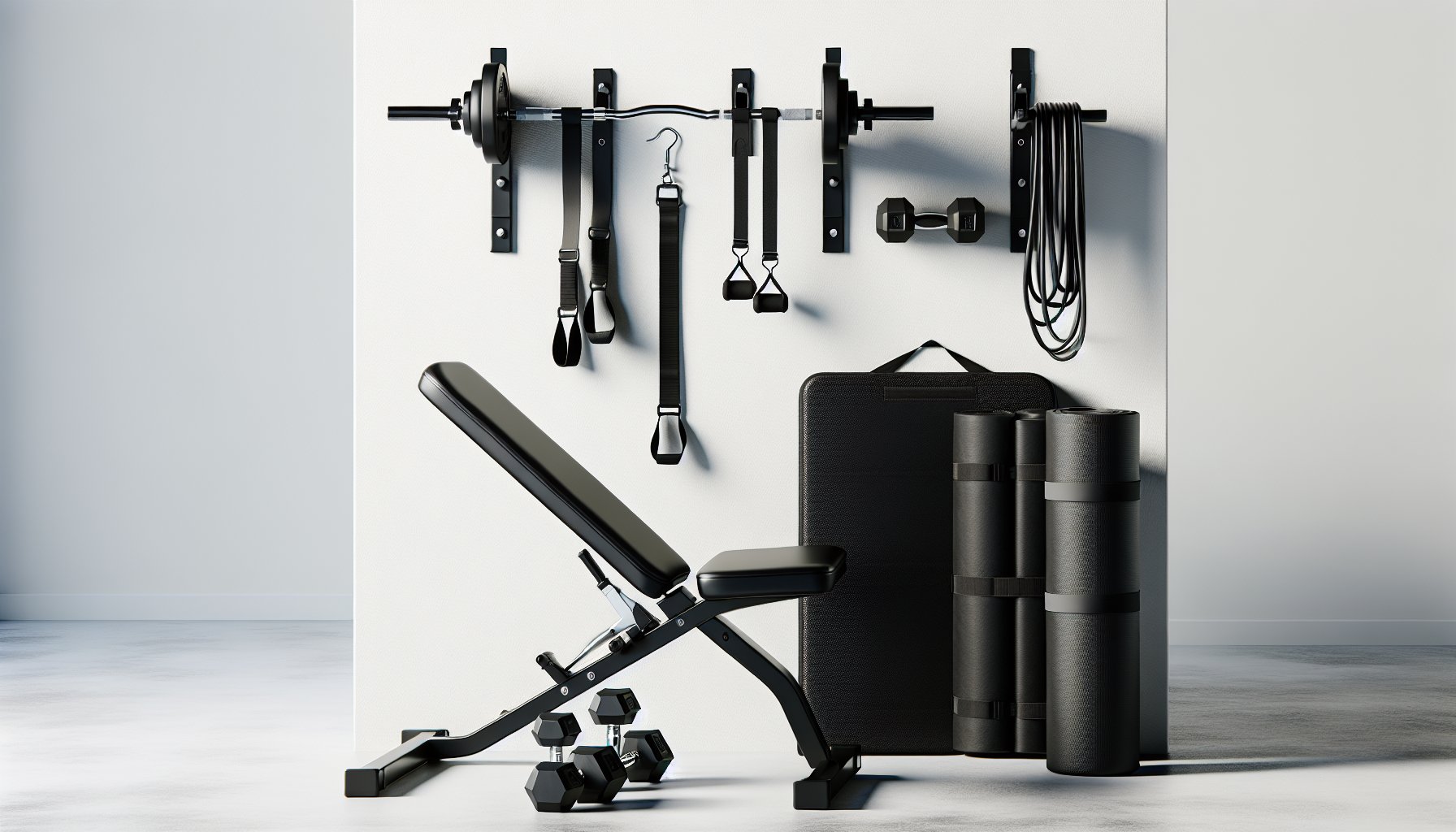
A 2023 National Apartment Association survey found that 68% of Americans living in apartments cite space limitations as the primary barrier to home fitness. The good news: research from the Journal of Strength and Conditioning Research confirms that effective strength training requires only 25-50 square feet of dedicated space when using compact equipment and proper exercise selection.
Quick Summary:
- Foldable equipment and wall-mounted storage can reduce your gym footprint by 70-80%
- Multi-use equipment like adjustable dumbbells and resistance bands replace dozens of single-purpose items
- Vertical storage solutions and under-bed options maximize floor space for actual training
- Noise-reducing mats and strategic equipment choices prevent neighbor complaints
- Bodyweight exercises combined with minimal equipment deliver complete training in 6×6 foot spaces
Understanding Small Space Training
Small space home gyms succeed when you prioritize versatility over variety. Traditional commercial gyms spread equipment across thousands of square feet, but research from the American College of Sports Medicine shows that 5-7 key pieces of equipment can replicate nearly every movement pattern needed for complete fitness development.
The key difference is equipment selection. Instead of accumulating multiple single-purpose items, small space setups rely on adjustable, foldable, and multi-functional gear that stores efficiently when not in use. A well-designed small space gym occupies 15-40 square feet of dedicated floor space, with most equipment stored vertically or tucked away between sessions.
The Science of Compact Training
Studies published in the Journal of Sports Sciences demonstrate that training effectiveness depends on movement quality and progressive overload, not equipment variety. Researchers found that participants using minimal equipment in confined spaces achieved identical strength gains to those with full gym access when programs were properly designed.
The mechanism is straightforward: your muscles respond to mechanical tension, metabolic stress, and muscle damage, regardless of whether that stimulus comes from a cable machine or a resistance band. A 2022 meta-analysis in Sports Medicine confirmed that home-based resistance training with minimal equipment produced comparable hypertrophy outcomes to traditional gym training when volume and intensity were matched.
Space constraints actually encourage better exercise selection. When you cannot accumulate redundant equipment, you naturally focus on compound movements that train multiple muscle groups simultaneously, which research shows are more time-efficient and effective than isolation exercises for most training goals.
Essential Equipment for Small Spaces
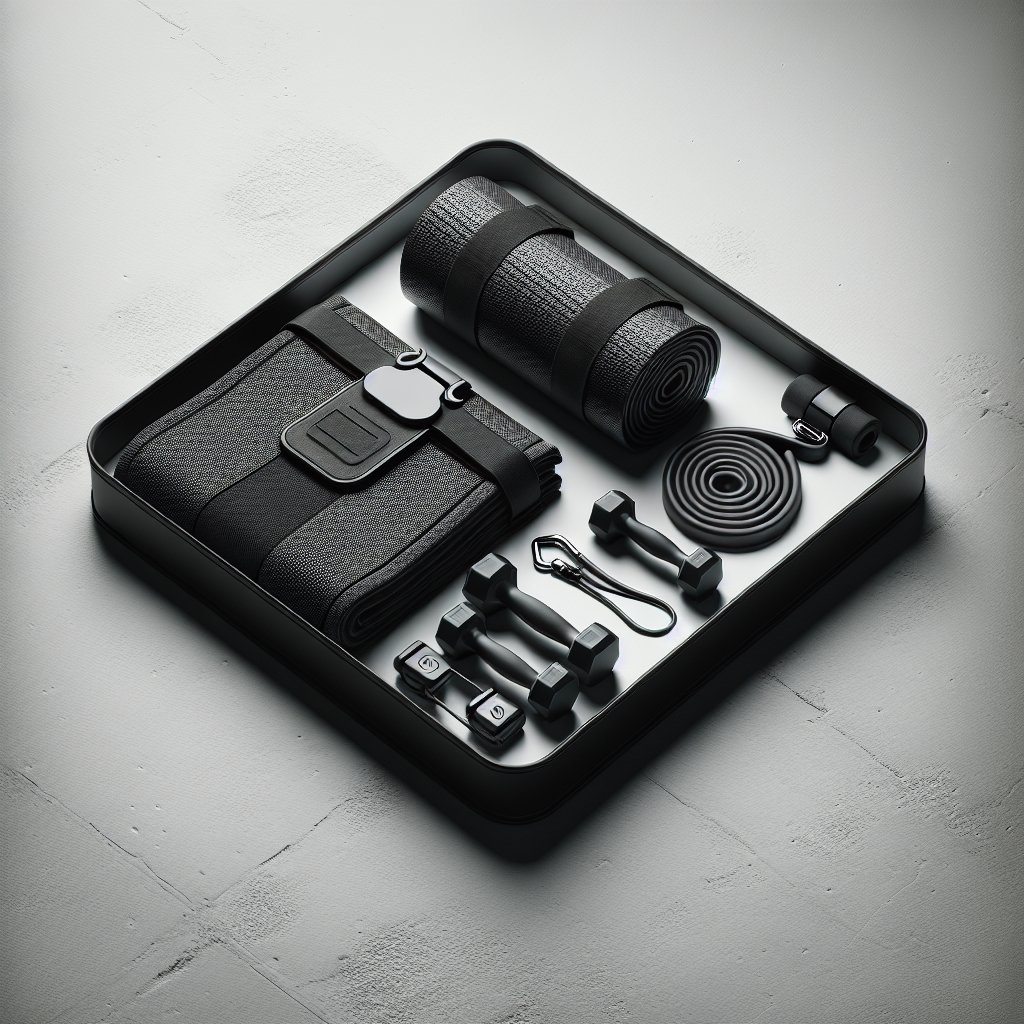
The foundation of any small space gym starts with adjustable dumbbells. Models like PowerBlock Elite Adjustable Dumbbells (around $400 per pair) replace 16 pairs of traditional dumbbells while occupying just 12×12 inches of floor space. This single investment eliminates the need for bulky dumbbell racks and provides 5-50 pound resistance adjustments in 2.5-5 pound increments.
Resistance bands offer the second-highest return on space investment. A complete set like the TRX Bandit Resistance Bands (approximately $50) stores in a drawer but provides variable resistance equivalent to 5-150 pounds depending on band thickness and attachment configuration. Research from the Journal of Human Kinetics shows that band training produces similar strength and muscle growth outcomes to free weights when tension is matched.
For pull exercises, a doorframe pull-up bar represents the most space-efficient upper body strength tool. The Iron Gym Total Upper Body Workout Bar (around $30) installs without permanent mounting and removes in seconds for storage. When combined with resistance bands for assistance or added resistance, this single piece enables dozens of back, bicep, and shoulder variations.
A foldable weight bench transforms your setup from functional to comprehensive. The Bowflex 5.1S Stowable Bench (approximately $250) adjusts to flat, incline, and decline positions, then folds to 10 inches thick for under-bed or closet storage. This enables proper form on pressing movements and expands exercise options by 40-50% compared to standing-only training.
Verdict: The adjustable dumbbell-resistance band-pull-up bar combination provides 90% of commercial gym functionality in less than 3 square feet of permanent footprint. Add a foldable bench if floor pressing is a priority.
Storage Solutions That Actually Work
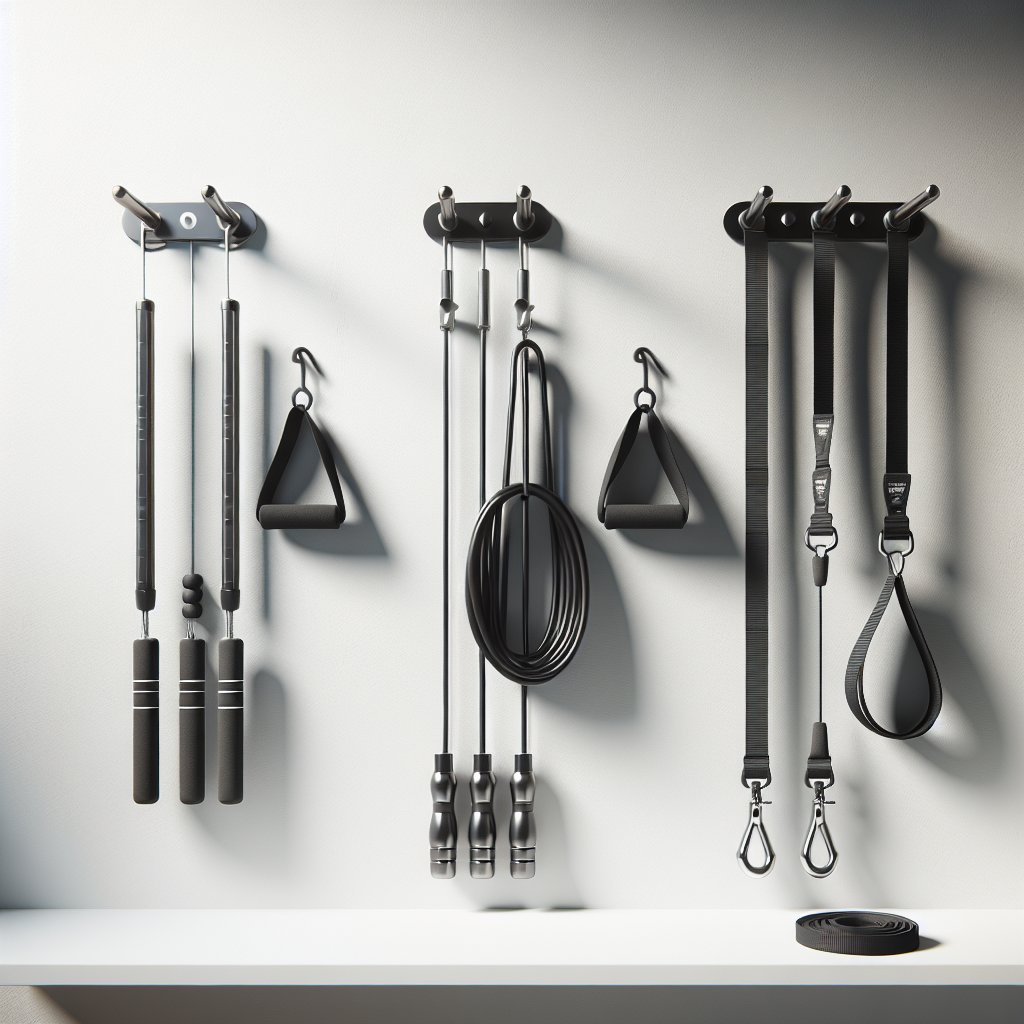
Vertical storage is the single most effective space-saving strategy. Wall-mounted pegboards or slatwall systems turn unused wall space into organized equipment storage. Install a 4×4 foot pegboard section for approximately $40 in materials, then use heavy-duty hooks to hang resistance bands, jump ropes, yoga mats, and accessories at shoulder height for instant access.
Under-bed storage works for flat items and smaller equipment. Rolling storage bins measuring 6 inches tall fit beneath most bed frames and can house resistance bands, ab wheels, sliding discs, and folded yoga mats. The Sterilite 60-Quart Under Bed Storage Box (around $15) dimensions match standard bed clearances while protecting equipment from dust accumulation.
Behind-door storage handles smaller accessories efficiently. Over-door organizers with clear pockets keep resistance bands, door anchors, and workout accessories visible and accessible without consuming any floor or wall space. This approach works particularly well in studio apartments where every wall section serves multiple purposes.
Foldable equipment must actually fold easily to be useful. Test collapse mechanisms before purchasing. If setup takes more than 60 seconds, you will skip workouts. Quality foldable benches should collapse to less than 12 inches thick and roll on wheels for single-person movement. Similarly, adjustable dumbbells should allow weight changes in under 10 seconds to maintain workout flow.
Noise Reduction for Apartment Training
Sound transmission is the primary complaint in multi-unit buildings. Research from the Acoustical Society of America shows that impact noise from dropping weights can transmit through floors at 60-75 decibels, well above the 45-decibel threshold that triggers neighbor disturbance.
High-density rubber flooring cuts impact noise by 70-80% compared to bare floors. Interlocking rubber tiles measuring 3/4 inch thick create a permanent or semi-permanent gym floor that also protects subflooring from equipment damage. The BalanceFrom Puzzle Exercise Mat (approximately $30 for 24 square feet) offers tool-free installation and enough density to muffle dumbbell setting and bodyweight impact exercises.
Equipment selection matters as much as flooring. Replace plate-loaded barbells with adjustable dumbbells to eliminate plate clanging. Choose resistance bands over cables for pulling movements. Substitute bodyweight exercises for high-impact cardio like jumping rope or box jumps during early morning or late evening sessions when noise sensitivity is highest.
Controlled eccentric movements reduce impact noise while actually increasing training effectiveness. Research published in the European Journal of Applied Physiology confirms that emphasizing the lowering phase of lifts enhances strength and muscle growth. Lower weights slowly over 2-3 seconds rather than letting gravity do the work, then set dumbbells down gently instead of dropping them.
Training Strategies for Limited Space
Circuit training maximizes small space efficiency by rotating through exercises with minimal rest. This approach keeps your heart rate elevated while allowing muscles to recover between sets, enabling effective training in spaces as small as 6×6 feet. Research from Medicine & Science in Sports & Exercise shows circuit training burns 30% more calories per session than traditional rest-based training while building equivalent strength.
Unilateral exercises work one limb at a time, allowing you to use lighter weights that fit smaller spaces while still achieving muscle activation comparable to bilateral movements. Single-arm dumbbell rows, single-leg deadlifts, and split squats require less total load than barbell equivalents, which means smaller dumbbells and reduced storage needs. Studies demonstrate that unilateral training also corrects strength imbalances and improves stability.
Supersets pair opposing muscle groups back-to-back without rest, doubling workout density. While one muscle works, its antagonist recovers. This technique fits small spaces because you can position two pieces of equipment within arm's reach and alternate between them. A push-up to resistance band row superset, for example, trains your entire upper body using only a pull-up bar with bands and 4 square feet of floor space.
Time-based intervals work better than rep counts in confined areas. Set a timer for 40 seconds of work followed by 20 seconds of transition, which allows you to move equipment and set up the next exercise without rushing. This structure maintains workout intensity while accommodating the practical realities of changing resistance bands, adjusting dumbbells, or repositioning your bench.
Multi-Use Equipment That Earns Its Space
Every piece of equipment in a small space gym must justify its footprint with multiple functions. Suspension trainers like the TRX HOME2 System (around $170) anchor to doors or ceiling mounts and enable 300+ exercises using just bodyweight resistance. This single tool trains every muscle group through pushing, pulling, squatting, hinging, and core stability patterns.
Adjustable kettlebells condense an entire kettlebell rack into one compact unit. Unlike traditional kettlebells that require dedicated storage space for multiple weights, adjustable models let you dial resistance from 10-40 pounds within the same handle. This makes them ideal for small spaces while supporting progressive overload for swings, goblet squats, and Turkish get-ups.
Resistance band systems with door anchors transform any doorframe into a cable station. By attaching bands at different heights and angles, you replicate high-to-low cable crossovers, low-to-high face pulls, and horizontal rows without the 8-foot footprint of an actual cable machine. Our resistance bands guide covers setup and exercise variations in detail.
Yoga mats serve triple duty as exercise surface, stretching area, and core training platform. Choose 6mm thick mats that provide enough cushioning for comfort without being so thick they create instability during standing exercises. Roll them up for storage in corners or behind furniture when not in use.
Space-Efficient Workout Programming
A complete small space program rotates through three training styles: strength, metabolic conditioning, and mobility. This variety keeps equipment needs minimal while addressing all fitness components. Check our home gym essentials article for foundational programming strategies.
Sample strength session (25 minutes):
- Adjustable dumbbell goblet squats: 4 sets of 8 reps
- Single-arm dumbbell rows: 4 sets of 10 per arm
- Floor press with dumbbells: 4 sets of 8 reps
- Resistance band face pulls: 3 sets of 15 reps
This workout uses only dumbbells, a resistance band, and 6×6 feet of floor space, yet trains every major muscle group through fundamental movement patterns.
Metabolic circuits (20 minutes):
- Jump rope: 45 seconds
- Resistance band squats: 45 seconds
- Push-ups: 45 seconds
- Plank holds: 45 seconds
- Rest: 60 seconds
- Repeat 5 rounds
This style requires minimal equipment while elevating heart rate and burning calories. For equipment-free options, see our no equipment workout guide.
Budget-Friendly Small Space Setup
You can build an effective small space gym for under $300 by prioritizing equipment that delivers maximum exercise variety. Start with a set of resistance bands with door anchor (around $20), add a doorframe pull-up bar ($30), and invest in a set of adjustable dumbbells ($200-400 depending on weight range). This trio enables 100+ exercises and fits in a single closet.
Our budget home gym article covers cost-saving strategies like buying used equipment, DIY storage solutions, and phased purchasing plans that spread costs over 3-6 months while building a complete setup.
For dumbbells specifically, read our best dumbbells guide for detailed comparisons of adjustable models that fit different budgets and space constraints. The selection mechanism matters, plate configuration affects footprint, and handle design influences exercise options.
Common Small Space Mistakes
The biggest error is accumulating equipment without a storage plan. Every purchase should answer two questions: where will this live when not in use, and can I access it in under 30 seconds? Equipment that requires significant setup time gets used 60% less frequently according to behavioral research on exercise adherence.
Buying fixed-weight dumbbells instead of adjustable sets wastes space exponentially. A complete fixed dumbbell set from 10-50 pounds requires 15-20 square feet of permanent floor space and costs $400-800. Adjustable dumbbells deliver the same weight range in 1 square foot for $300-500.
Neglecting floor protection damages rental deposits and creates noise complaints. Even bodyweight exercises generate impact forces 2-3 times your body weight during movements like burpees or jump squats. A $30 rubber mat prevents hundreds in flooring damage and maintains good neighbor relationships.
Choosing equipment based on aspirations rather than actual use patterns leads to clutter. If you have never enjoyed rowing, a $600 folding rowing machine will not change that, and it will consume valuable storage space. Stick to equipment that supports exercises you actually perform consistently.
Frequently Asked Questions
How much space do I need for a functional home gym?
A 6×6 foot area (36 square feet) provides enough space for most strength training exercises when using compact equipment like adjustable dumbbells and resistance bands. Add another 2×6 feet if you want to include a foldable bench. Dedicated cardio equipment like treadmills requires 6-8 additional feet of length.
Can I build muscle effectively in a small space gym?
Yes. Research published in the Journal of Strength and Conditioning Research confirms that muscle growth depends on training volume, intensity, and progressive overload, not equipment variety or space. Adjustable dumbbells and resistance bands provide sufficient resistance for continued strength gains in most individuals when programs are properly designed.
What is the quietest flooring option for apartment gyms?
High-density rubber mats measuring 3/4 to 1 inch thick reduce impact noise transmission by 70-80% compared to bare floors. Interlocking rubber tiles work better than rolled rubber for small spaces because you can customize coverage area and remove sections if you move.
How do I store a weight bench in a studio apartment?
Choose a foldable bench that collapses to 10 inches or less in thickness and includes wheels for easy movement. Store it vertically in a closet, slide it under your bed, or position it behind a door or couch when not in use. Test the folding mechanism before purchasing to ensure single-person operation.
Are resistance bands as effective as dumbbells for building strength?
Studies show that resistance bands produce comparable strength and muscle growth outcomes to free weights when tension is matched throughout the movement range. Bands offer variable resistance that increases as they stretch, which can enhance muscle activation during the concentric phase. Combining both tools provides the most complete stimulus.
What equipment allows the most exercise variety in limited space?
Adjustable dumbbells provide the highest exercise variety per square foot of storage space. A single pair enables 50+ exercises covering all major movement patterns. Suspension trainers rank second, offering 200-300 bodyweight exercise variations while hanging from a single door anchor.
How can I do cardio in a small apartment without disturbing neighbors?
Focus on low-impact cardio options like resistance band circuits, shadow boxing, or stepping exercises on rubber mats. Save high-impact activities like jump rope or burpees for daytime hours when noise tolerance is higher, and always use thick rubber flooring to minimize impact transmission.
What is the minimum dumbbell weight range I need?
For complete upper and lower body training, choose adjustable dumbbells that range from 5-10 pounds up to at least 40-50 pounds per hand. This range accommodates light isolation exercises like lateral raises and heavy compound movements like goblet squats or chest presses as you progress.
Can I install permanent wall mounts in a rental apartment?
Most rental agreements prohibit permanent modifications without landlord approval. Use door-mounted pull-up bars, freestanding pegboard systems, or command hooks rated for heavy loads that remove without wall damage. Always check your lease terms before drilling into walls or ceilings.
How often should I reorganize my small space gym?
Reevaluate your setup every 3 months. Remove equipment you have not used in 30 days, consolidate storage areas, and ensure your most frequently used items remain within 10 seconds of access. Small space efficiency depends on ruthless prioritization of equipment that actually gets used.
Do I need a full-length mirror in a small gym space?
A mirror improves form feedback but is not essential. A 12×48 inch door-mounted mirror provides enough reflection to check squat depth and pressing form without consuming floor space. Position it at torso height for maximum exercise visibility.
The Bottom Line
Effective training in small spaces requires strategic equipment selection and intelligent storage solutions, not massive square footage. Focus on multi-use, adjustable equipment that folds or stores vertically. Invest in quality rubber flooring to protect your space and maintain neighbor relationships. Prioritize compound movements and circuit-style training that maximizes limited floor area. With proper planning, a 6×6 foot area delivers complete strength, conditioning, and mobility training.
Sources:
- National Apartment Association. "2023 Apartment Resident Preferences Report." https://www.naahq.org/research
- Schoenfeld BJ, Grgic J. "Effects of range of motion on muscle development during resistance training interventions: A systematic review." SAGE Open Medicine. 2020;8. https://pubmed.ncbi.nlm.nih.gov/32030125/
- Lopes JSS, Machado AF, Micheletti JK, et al. "Effects of training with elastic resistance versus conventional resistance on muscular strength: A systematic review and meta-analysis." SAGE Open Medicine. 2019;7. https://pubmed.ncbi.nlm.nih.gov/30815258/
- Colado JC, Garcia-Masso X, Pellicer M, et al. "A comparison of elastic tubing and isotonic resistance exercises." International Journal of Sports Medicine. 2010;31(11):810-817. https://pubmed.ncbi.nlm.nih.gov/20703977/
- American College of Sports Medicine. "ACSM's Guidelines for Exercise Testing and Prescription, 11th Edition." 2021. https://acsm.org/education-resources/books/guidelines-exercise-testing-prescription/
- Paoli A, Moro T, Marcolin G, et al. "High-Intensity Interval Resistance Training (HIRT) influences resting energy expenditure and respiratory ratio in non-dieting individuals." Journal of Translational Medicine. 2012;10:237. https://pubmed.ncbi.nlm.nih.gov/23176325/
- Jeon JY, Lee PJ, Sato S. "Use of the standard rubber ball as an impact source with heavyweight concrete floors." Journal of the Acoustical Society of America. 2009;126(1):167-178. https://pubmed.ncbi.nlm.nih.gov/19603874/