
Resistance bands produce muscle activation comparable to free weights while costing a fraction of the price. Research published in the Journal of Human Kinetics found that elastic resistance training generates similar strength gains to conventional weight training when matched for intensity, with the added benefit of constant tension throughout the entire range of motion. A complete band set costs $20-50, fits in a gym bag, and enables muscle-building workouts anywhere without the space requirements of traditional equipment.
Quick Summary:
- Loop bands, tube bands, mini bands, and pull-up assist bands each serve different training purposes
- Bands provide constant tension that increases as they stretch, challenging muscles differently than free weights
- Effective for both muscle building (with heavy resistance) and rehabilitation (with lighter bands and controlled movements)
- A complete set of quality resistance bands costs between $20-50 and fits in a gym bag
- Best exercises include banded squats, pull-aparts, lat pulldowns, chest press, and bicep curls
What Are Resistance Bands
Resistance bands are elastic training tools made from latex, rubber, or synthetic materials that provide variable resistance based on how far they're stretched. Unlike dumbbells or barbells that provide constant gravitational resistance, bands create increasing tension as they elongate, delivering maximum resistance at peak contraction.
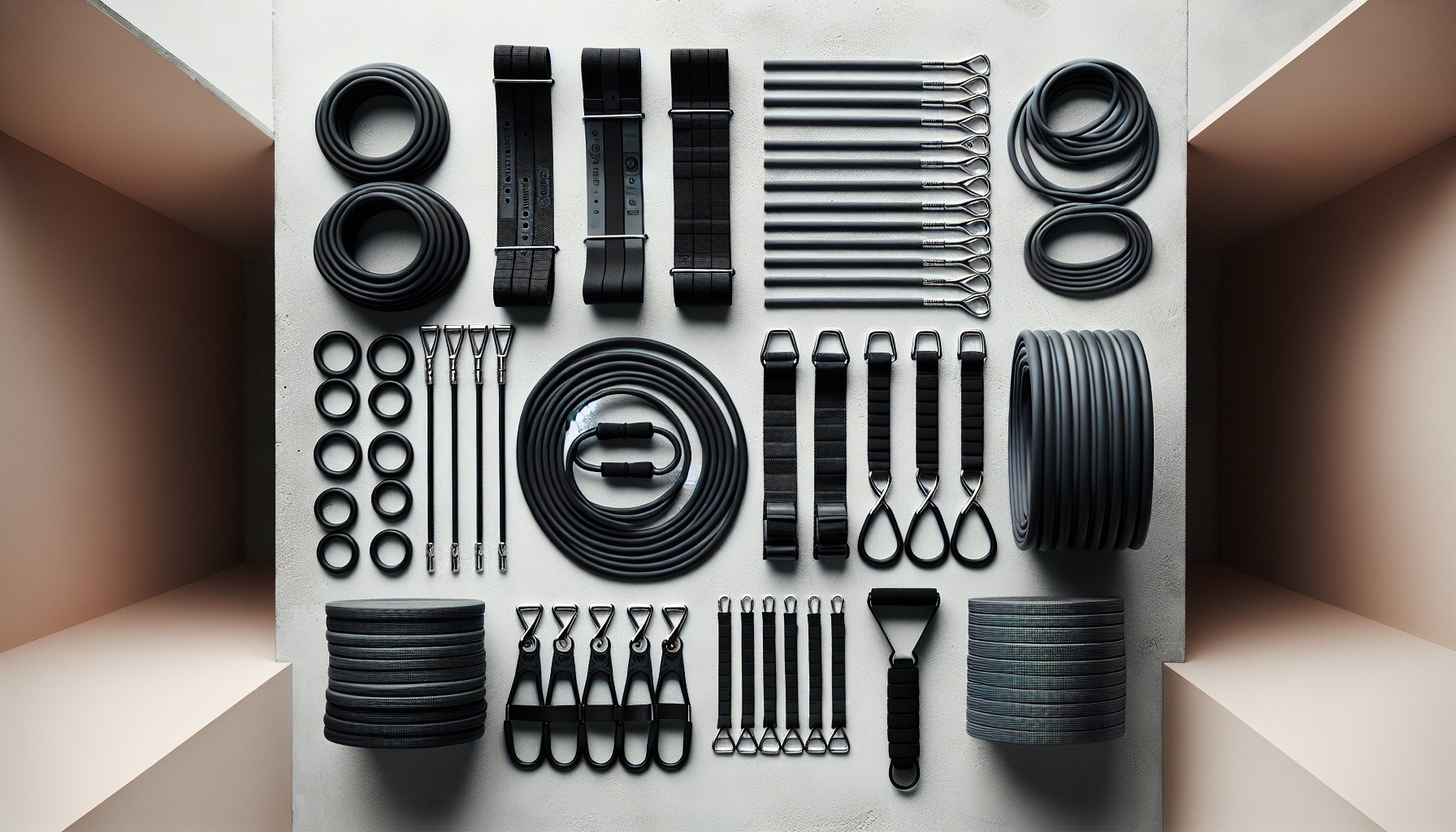
The four main types serve distinct purposes. Loop bands (also called power bands) are continuous circles ranging from light to extremely heavy resistance, ideal for assisted pull-ups, banded barbell lifts, and full-body movements. Tube bands feature handles on each end with detachable resistance tubes, making them versatile for upper body exercises like rows and presses. Mini bands are small loops designed for glute activation, lateral walks, and lower body warm-ups. Pull-up assist bands are heavy-duty loops specifically engineered to support bodyweight during pull-ups and dips.
Resistance levels are typically color-coded, though colors vary by manufacturer. Most systems range from extra-light (5-15 pounds of resistance) through medium (20-35 pounds) to extra-heavy (50-120 pounds). The actual resistance depends on how far you stretch the band—a medium band might provide 25 pounds at moderate stretch but 40 pounds when fully extended.
How Resistance Bands Build Muscle
Bands create progressive tension through elastic deformation. When you stretch latex or rubber, the molecular chains align and resist further elongation, producing force that increases linearly with distance. This ascending resistance curve means the band pulls hardest exactly when your muscles are strongest—at peak contraction.
A 2019 study in SAGE Open Medicine compared elastic resistance training to free weight training in untrained adults over 10 weeks. Both groups achieved similar increases in muscle thickness, strength, and functional capacity. The key difference was the resistance profile: bands provided maximum load at full muscle shortening, while weights provided maximum load at full muscle lengthening.
This constant tension eliminates the "dead spots" present in many free weight exercises. During a dumbbell bicep curl, tension drops significantly at the top of the movement. With bands, tension peaks at the top, maintaining muscle activation throughout the entire rep. This continuous loading creates significant metabolic stress and mechanical tension—two of the three primary drivers of muscle growth according to current hypertrophy research.
The American Council on Exercise notes that elastic resistance activates stabilizer muscles differently than free weights because the band tries to pull you out of position in multiple directions simultaneously. This demands greater core engagement and balance, though it also requires stricter form to prevent the band from pulling you into poor positions.
Types of Resistance Bands and Their Uses
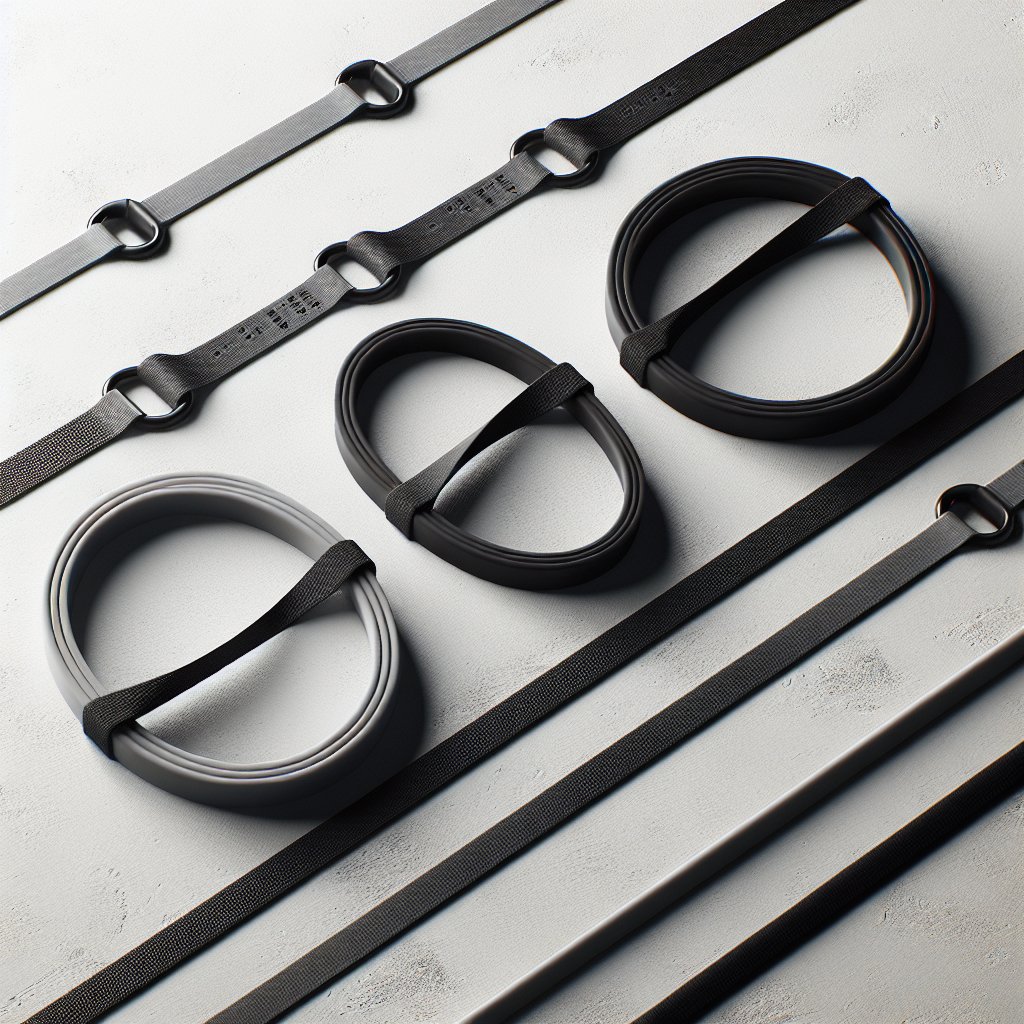
Loop Bands (Power Bands): These continuous loops range from 0.5 inches to 4.5 inches wide and provide 5-175 pounds of resistance. Thin loops work for stretching and warm-ups. Thick power bands handle heavy resistance for squats, deadlifts, bench press, and assisted pull-ups. You can also loop them around a power rack or door anchor for rowing movements. The Serious Steel Fitness Pull-Up Assist Bands (around $30 for a set) offer five resistance levels in one package.
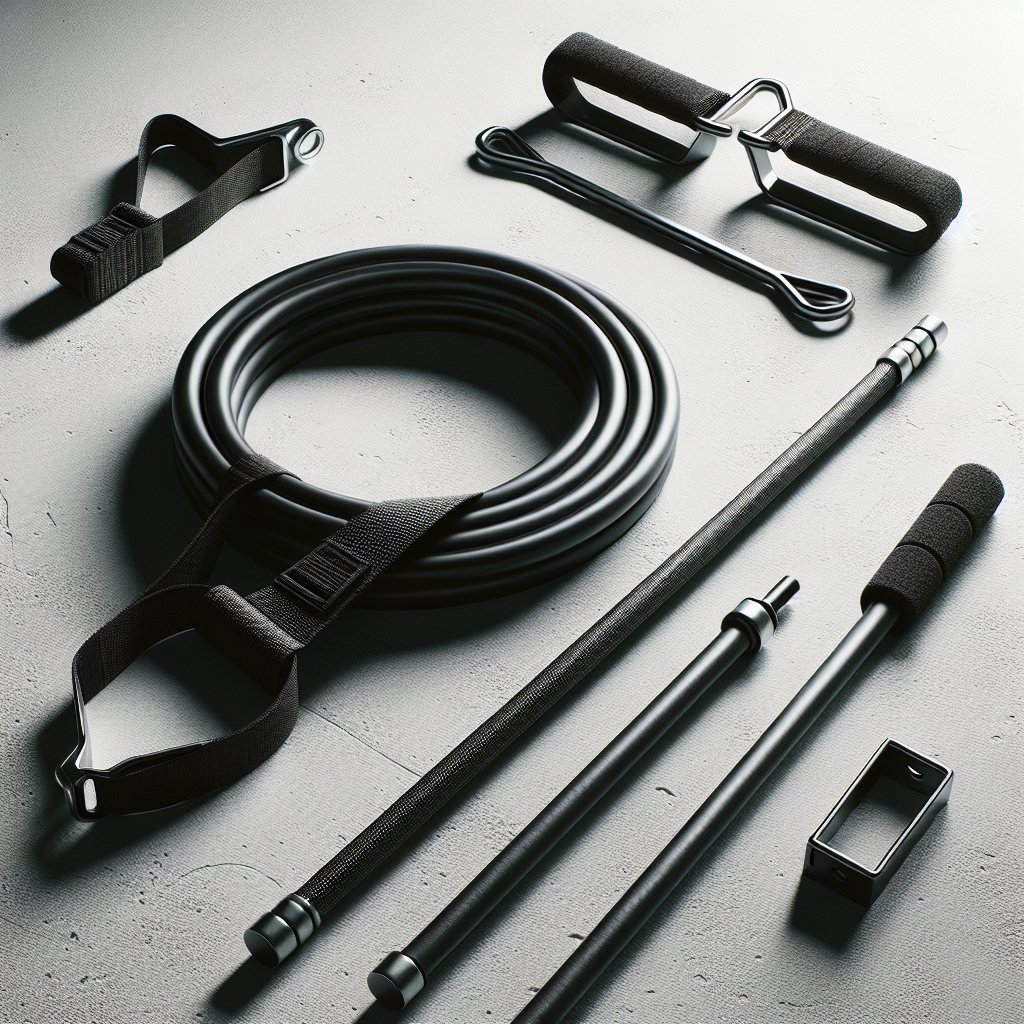
Tube Bands with Handles: These feature plastic or foam handles attached to interchangeable rubber tubes, making them ideal for traditional upper body exercises. The handles provide a comfortable grip for chest presses, shoulder raises, and curls. Most sets include a door anchor and ankle straps for expanded exercise options. The Fit Simplify Resistance Bands Set (approximately $25) includes five tubes, handles, door anchor, and carrying bag.
Mini Bands: Small continuous loops measuring 9-12 inches in circumference target the glutes, hips, and lower body. They're essential for glute activation before squats and deadlifts, lateral band walks, and clamshells. Physical therapists use them extensively for hip stability and knee tracking work. Position them above the knees, at the ankles, or around the feet depending on the exercise. The Perform Better Mini Band Set (around $20) includes multiple resistance levels specifically designed for lower body activation.
Pull-Up Assist Bands: These are heavy-duty loop bands specifically designed to support your bodyweight during pull-ups, dips, and muscle-ups. Loop the band over the pull-up bar, step or kneel into the bottom, and the band will assist you through the movement. As you get stronger, switch to lighter bands until you can perform unassisted reps. These are identical to power bands but marketed specifically for pull-up assistance. Door anchors like the XPRT Fitness Door Anchor (approximately $10) expand exercise options by allowing you to anchor bands to any door frame safely.
Best Resistance Band Exercises
Banded Squats: Loop a heavy band around your upper back and stand on the other end, or loop it around a power rack and hold handles at shoulder height. The ascending resistance matches your strength curve—you're strongest at the top of a squat, exactly where bands provide maximum tension. Sets of 8-15 reps build leg strength and muscle endurance.
Face Pulls and Pull-Aparts: Anchor a loop band at face height or hold a long band at arm's length. Pull the band apart or toward your face, focusing on retracting your shoulder blades. These movements bulletproof your shoulders by strengthening the rear deltoids and rotator cuff muscles. Perform 15-20 reps as part of your warm-up or between pressing sets.
Banded Lat Pulldowns: Loop a heavy band over a pull-up bar or door anchor. Kneel below it and pull the band down to your chest, squeezing your lats at the bottom. This movement builds the same muscles as traditional lat pulldowns but with the advantage of portability. Work in the 10-15 rep range for muscle growth.
Banded Chest Press: Wrap a loop band around your upper back or anchor a tube band behind you at chest height. Press forward until your arms are extended, then control the return. The band's resistance increases as you press out, keeping constant tension on your pecs throughout the movement. Aim for 12-20 reps per set.
Bicep Curls and Tricep Extensions: Stand on the middle of a tube band and curl the handles to your shoulders, or press a loop band overhead for tricep extensions. The variable resistance provides a strong contraction at peak flexion. Higher reps (15-20) work well for arm training with bands.
Banded Deadlifts: Loop heavy bands under your feet and over your shoulders, or around a loaded barbell for accommodating resistance. The band adds 30-80 pounds of resistance at lockout, training explosive power and strengthening the top portion of the lift. This is an advanced technique used by powerlifters to break through plateaus.
Resistance Bands for Strength vs Rehabilitation
For strength and muscle building, use bands that provide genuine resistance at the target rep range. If you can easily perform 25 reps, the band is too light for hypertrophy. Select resistance that causes technical failure between 8-20 reps depending on the exercise. Compound movements like banded squats and chest presses respond well to 8-12 reps, while isolation exercises like curls and lateral raises can be trained with 12-20 reps.
Apply the same progressive overload principles you would with free weights. Increase resistance by switching to heavier bands, adding sets and reps, slowing down the tempo, or combining multiple bands for greater resistance. Track your workouts to ensure you're progressively increasing training volume over time.
Rehabilitation and prehab training requires the opposite approach—lighter resistance, higher reps, and controlled movements. Physical therapists use light mini bands for hip abduction, external rotation, and glute activation to correct movement imbalances and restore function after injury. These exercises typically use 15-30 reps with an emphasis on muscle activation and control rather than fatigue.
The Journal of Orthopaedic & Sports Physical Therapy published research showing that elastic resistance exercises effectively treat rotator cuff tendinopathy, with subjects experiencing significant pain reduction and strength improvements over 12 weeks. The key was submaximal loading—using resistance light enough to complete 15-20 controlled reps without pain.
Verdict: For muscle building, use resistance bands that limit you to 8-20 reps with proper form, progressively increasing difficulty over time. For rehabilitation and prehab, choose lighter bands that allow 15-30 controlled reps focused on movement quality and muscle activation.
Programming with Resistance Bands
Bands work as your primary training tool, as supplemental resistance to barbell training, or as a portable option when traveling. If bands are your only equipment, structure workouts around compound movements performed 3-4 days per week with full-body or upper/lower splits.
A sample full-body band workout includes: banded squats (3 sets of 12-15 reps), banded chest press (3 sets of 12-15), banded rows (3 sets of 12-15), banded shoulder press (3 sets of 10-12), banded bicep curls (2 sets of 15-20), and banded tricep extensions (2 sets of 15-20). This hits all major muscle groups with sufficient volume for growth when performed 3 times per week with progressive overload.
Bands complement barbell training through accommodating resistance—adding bands to squats, deadlifts, and bench press increases resistance at the top of the movement where you're strongest. Powerlifters and strength athletes use this technique to develop explosive power and strengthen sticking points. Add 20-30% of bar weight in band tension at lockout as a starting point.
For conditioning and metabolic work, circuit band workouts deliver an effective cardio alternative. Perform 30-45 seconds of work per exercise with minimal rest between movements. Exercises like banded jumping jacks, squat-to-press, high pulls, and mountain climbers with band resistance elevate heart rate while maintaining muscle tension. Our home workout guide offers additional circuit training strategies.
Bands excel as a travel training solution. A set of loop bands weighs less than two pounds and fits in any luggage. You can anchor them to hotel room doors, outdoor structures, or simply stand on them. This makes maintaining your training schedule possible even when away from your gym for extended periods.
Band Durability and Care
Quality latex resistance bands last 1-3 years with proper care, while cheaper brands may snap or lose elasticity within months. Inspect bands before each use for small tears, cracks, or areas where the latex has become thin or chalky. A band that snaps under tension can cause injury.
Store bands away from direct sunlight and heat, both of which degrade latex. UV exposure breaks down the molecular structure, causing bands to become brittle. Keep them in a cool, dry place—a gym bag or drawer works perfectly. Avoid storing them stretched or tied in knots, as this creates weak points.
Clean bands with mild soap and water, then dry thoroughly before storage. Chalk, dirt, and sweat residue degrade latex over time. Some users apply a light coat of silicone spray or talcum powder to prevent bands from sticking to themselves, though this is optional.
When using bands outdoors, avoid concrete or asphalt surfaces that can abrade the latex. Check anchoring points for sharp edges that might cut the band. Heavy-duty loop bands are more durable than tube bands with plastic handles—the handle attachment points are common failure points on tube bands.
Budget for replacement every 1-2 years if you train consistently with bands. A full set from WOD Nation Pull-Up Bands (around $35) or Tribe Resistance Bands Set (approximately $40) provides years of reliable training at a fraction of the cost of a single set of adjustable dumbbells.
Resistance Bands vs Free Weights
Bands and free weights have complementary strengths. Free weights provide consistent, measurable resistance governed by gravity. A 50-pound dumbbell is always 50 pounds, making progressive overload straightforward to track. Weights excel for heavy compound movements like squats, deadlifts, and bench press where you can precisely increase load by 2.5-10 pound increments.
Bands provide variable ascending resistance that matches human strength curves better for certain exercises. Your muscles produce more force in shortened positions than lengthened positions—bands exploit this by increasing tension as muscles shorten. This creates a strong peak contraction that free weights cannot replicate.
The practical advantage of bands is portability and cost. A complete band set costs $20-50 versus $300-800 for a quality set of adjustable dumbbells. Bands weigh ounces and fit in a backpack, while home gym equipment requires dedicated space. For travelers, minimalists, or those on tight budgets, bands deliver legitimate training stimulus without the investment or space requirements of iron.
The limitation of bands is difficult progression tracking. A red band from one manufacturer provides different resistance than a red band from another company. The amount of stretch affects resistance, so positioning and form variations change the actual load. This makes precise progressive overload harder to implement compared to simply adding 5 pounds to a barbell each week.
Most lifters benefit from combining both tools. Use free weights for primary strength work on the big lifts, then add bands for accessory exercises, warm-ups, and deload weeks. This approach in our budget home gym guide provides training variety without requiring multiple expensive equipment purchases.
Frequently Asked Questions
Can you build muscle with resistance bands alone?
Yes, resistance bands build muscle when you apply sufficient resistance, progressive overload, and adequate volume. Research shows elastic resistance training produces similar muscle growth to free weight training when intensity and volume are matched. Choose bands heavy enough to limit you to 8-20 reps per set and progressively increase difficulty over time by using heavier bands, adding sets, or slowing tempo.
What resistance level should beginners start with?
Most beginners should start with a set containing light, medium, and heavy bands. Light bands (10-30 pounds) work for shoulder and arm exercises, medium bands (30-50 pounds) handle most upper body movements, and heavy bands (50-100 pounds) challenge leg exercises and pull-up assistance. Starting with a variety lets you match resistance to different exercises and strength levels.
How long do resistance bands last?
Quality latex resistance bands last 1-3 years with regular use and proper care. Store them away from sunlight and heat, clean them after sweaty workouts, and inspect for tears before each use. Cheaper bands may degrade within 6-12 months. Budget for replacement annually if you train with bands 3-4 times per week.
Are resistance bands good for pull-ups?
Resistance bands are excellent for building pull-up strength. Loop a heavy band over the bar and step or kneel into it—the band assists by supporting 20-80 pounds of your bodyweight depending on thickness. As you get stronger, progress to lighter bands. This approach builds the same muscles as pull-ups while allowing you to perform quality reps before you can handle full bodyweight.
Can resistance bands replace free weights?
Bands can replace free weights for muscle maintenance, rehabilitation, and general fitness, especially when traveling or training at home. However, serious strength development benefits from heavy barbell training because precise progressive overload is easier to track with iron. The ideal approach combines both: free weights for primary strength work and bands for accessories, warm-ups, and portability.
What's the difference between loop bands and tube bands?
Loop bands are continuous circles of latex without handles, ranging from thin mini bands to thick power bands. They're more versatile and durable but may be uncomfortable for some exercises. Tube bands feature handles attached to replaceable tubes, providing a comfortable grip for pressing and pulling movements but often failing at the handle attachment points. Loop bands are generally more durable and cost-effective.
How do you anchor resistance bands safely?
For home use, door anchors work well—place the anchor over a sturdy door, close it securely, and attach your band. Always pull away from the door, never toward it. Outdoors, loop bands around squat racks, posts, or trees, checking for sharp edges first. You can also stand on bands for vertical exercises or wrap them around your back for chest presses. Test the anchor with light tension before loading heavy resistance.
Are resistance bands good for physical therapy?
Physical therapists use resistance bands extensively for rehabilitation because they provide low-load, controlled resistance perfect for rebuilding strength after injury. Light bands allow 15-30 reps with minimal joint stress, helping restore range of motion and muscular endurance. Mini bands are particularly effective for hip and shoulder stability exercises that correct movement imbalances and reduce injury risk.
Can you combine multiple bands for more resistance?
Yes, loop multiple bands together or stack them to increase resistance. Two medium bands together provide resistance approaching a heavy band. This method extends the useful life of lighter bands as you get stronger and allows fine-tuned resistance adjustments. Just ensure both bands are in good condition without tears or weak spots before combining them under heavy tension.
What exercises work best with resistance bands?
The best band exercises are those that benefit from ascending resistance and constant tension: squats, chest presses, rows, shoulder presses, pull-aparts, lat pulldowns, bicep curls, and tricep extensions. Bands also excel for glute activation (lateral walks, clamshells), assisted pull-ups, and stretching. They're less effective for exercises requiring heavy eccentric loading like Romanian deadlifts, where free weights provide superior muscle damage stimulus.
How do resistance bands compare for strength training?
Bands build muscular endurance and size effectively but are less optimal than heavy free weights for developing maximal strength. The variable resistance and difficulty tracking precise load makes progressive strength development harder to measure. However, bands work well for strength maintenance during travel, rehabilitation from injury, and as supplemental work to enhance barbell training through accommodating resistance techniques.
The Bottom Line
Resistance bands deliver legitimate muscle-building stimulus for a fraction of the cost and space requirements of traditional gym equipment. They provide constant tension with ascending resistance that challenges muscles throughout the entire range of motion. Use heavy resistance for 8-20 reps to build muscle, or lighter bands for 15-30 reps during rehabilitation. While not a complete replacement for heavy barbell training, bands offer a portable, cost-effective training tool that belongs in every home gym.
Sources:
- Lopes JSS, et al. Effects of training with elastic resistance versus conventional resistance on muscular strength: A systematic review and meta-analysis. SAGE Open Medicine. 2019. https://pubmed.ncbi.nlm.nih.gov/30815258/
- Colado JC, et al. A comparison of elastic tubing and isotonic resistance exercises. International Journal of Sports Medicine. 2010. https://pubmed.ncbi.nlm.nih.gov/20703977/
- Andersen LL, et al. Muscle activation and perceived loading during rehabilitation exercises. Physical Therapy. 2010. https://pubmed.ncbi.nlm.nih.gov/20133444/
- American Council on Exercise. Resistance Band Training. ACE Fitness. https://www.acefitness.org/
- Schoenfeld BJ, Grgic J. Evidence-based guidelines for resistance training volume to maximize muscle hypertrophy. Strength and Conditioning Journal. 2018. https://journals.lww.com/nsca-scj/fulltext/2018/08000/evidence_based_guidelines_for_resistance_training.11.aspx