
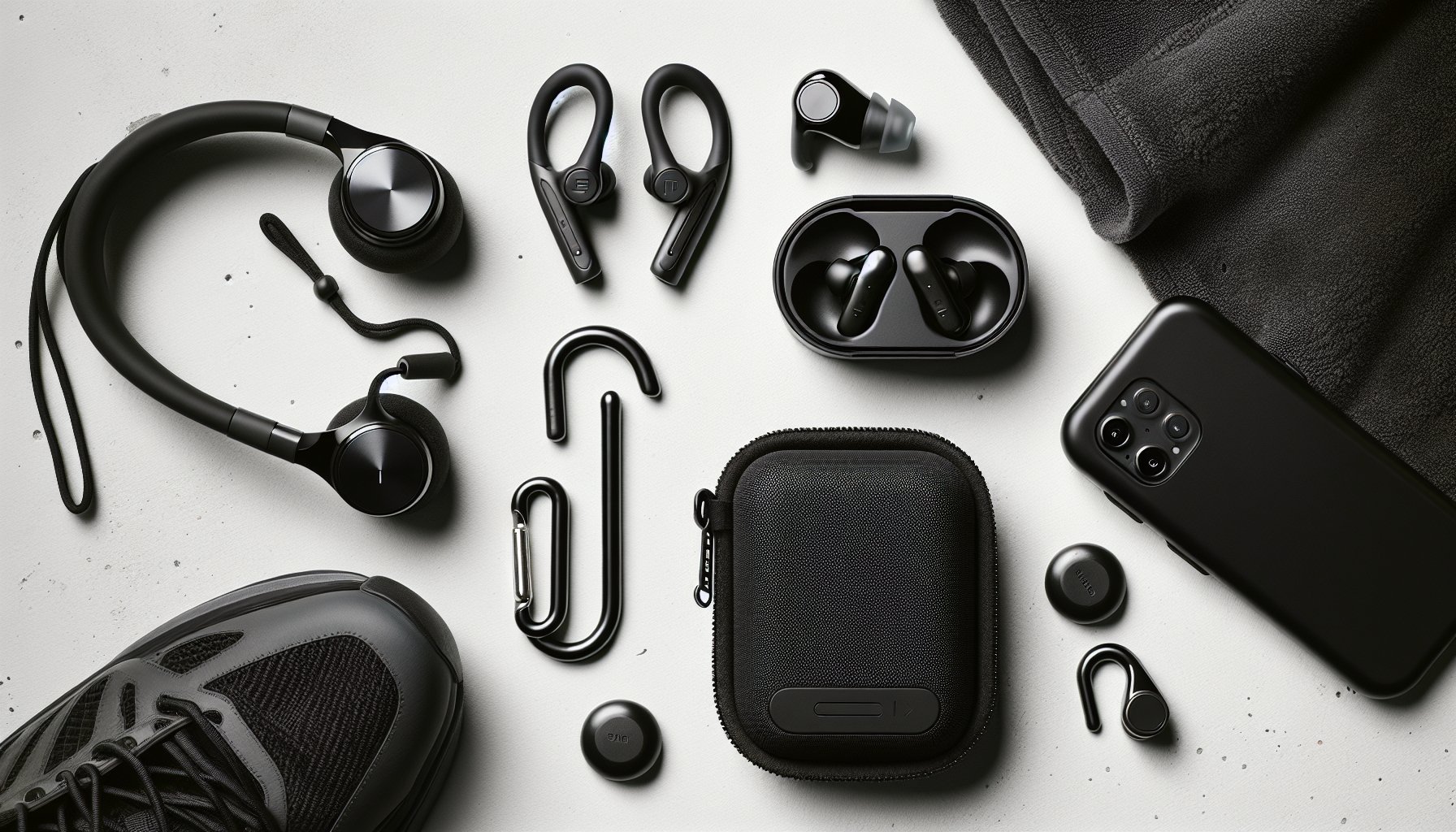
The right headphones can transform your training session. A 2023 study in Frontiers in Psychology found that listening to music during exercise increases endurance by 15% and reduces perceived exertion, making challenging workouts feel easier. But generic headphones fail fast in gym environments — sweat, movement, and repeated drops demand purpose-built audio gear.
Quick Summary:
- IPX4 rating is the minimum for sweat resistance, IPX7 for running in rain
- True wireless earbuds beat over-ear headphones for most gym activities
- Secure fit matters more than sound quality for high-intensity training
- Bone conduction headphones provide the safest option for outdoor running
- Expect to spend $50-80 for reliable workout earbuds, $150+ for premium features
Earbuds vs Over-Ear: Which Works Best for the Gym
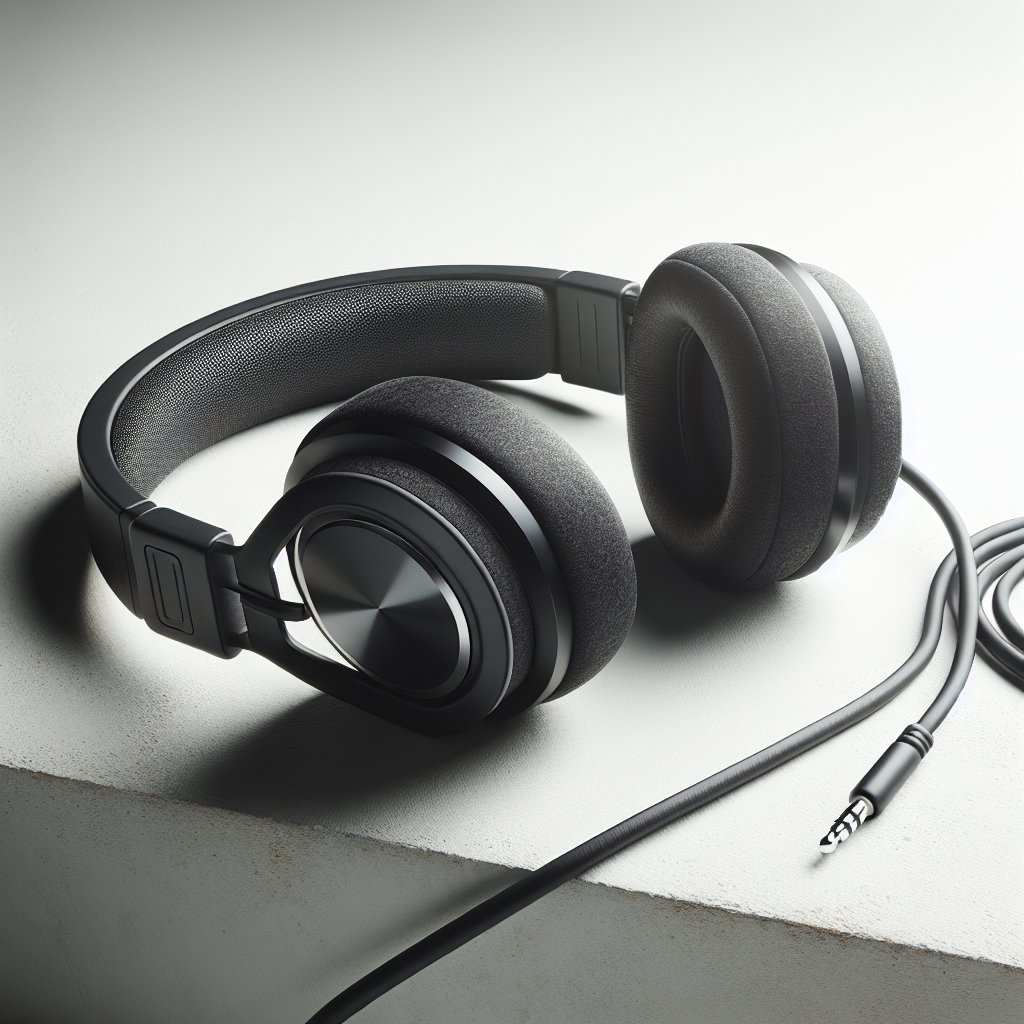
True wireless earbuds dominate gym floors for good reason. They weigh 4-6 grams per earbud compared to 200-300 grams for over-ear headphones, eliminating neck strain during bench press or overhead movements. The absence of a headband prevents interference with squat bar positioning and allows you to lie flat on benches without pressure points.
Over-ear headphones have one advantage: battery life. Premium over-ear models deliver 30-40 hours per charge versus 6-8 hours for most earbuds. If your training sessions regularly exceed 90 minutes or you forget to charge devices, over-ear headphones reduce charging frequency. However, they trap heat against your ears and scalp, creating discomfort during intense cardio sessions.
For running, earbuds provide better stability. Over-ear headphones bounce with each foot strike, requiring constant adjustment. For strength training, both work if the over-ear model has low clamping force — tight headbands cause headaches during long sessions.
Understanding IPX Ratings for Sweat and Water Resistance
The IPX rating system measures water resistance on a scale from IPX0 (no protection) to IPX8 (submersion beyond 1 meter). For workout headphones, you want minimum IPX4, which protects against sweat and light rain splashes from any direction.
IPX4 handles typical gym use — indoor cycling, weight training, light running. Your sweat won't damage the electronics, but don't rinse these headphones under a faucet. IPX5 adds protection against sustained water jets, suitable for outdoor running in steady rain. IPX7 means you can rinse them completely under running water and they'll survive brief submersion up to 1 meter deep for 30 minutes.
Most workout-specific earbuds range from IPX4 to IPX7. Some brands like Jabra Elite Active 8 Gen 2 (around $150) offer military-grade durability testing beyond IPX ratings, surviving temperature extremes and repeated drops. The charging case also needs water resistance — check if the IPX rating applies to both earbuds and case.
Secure Fit: The Most Important Feature
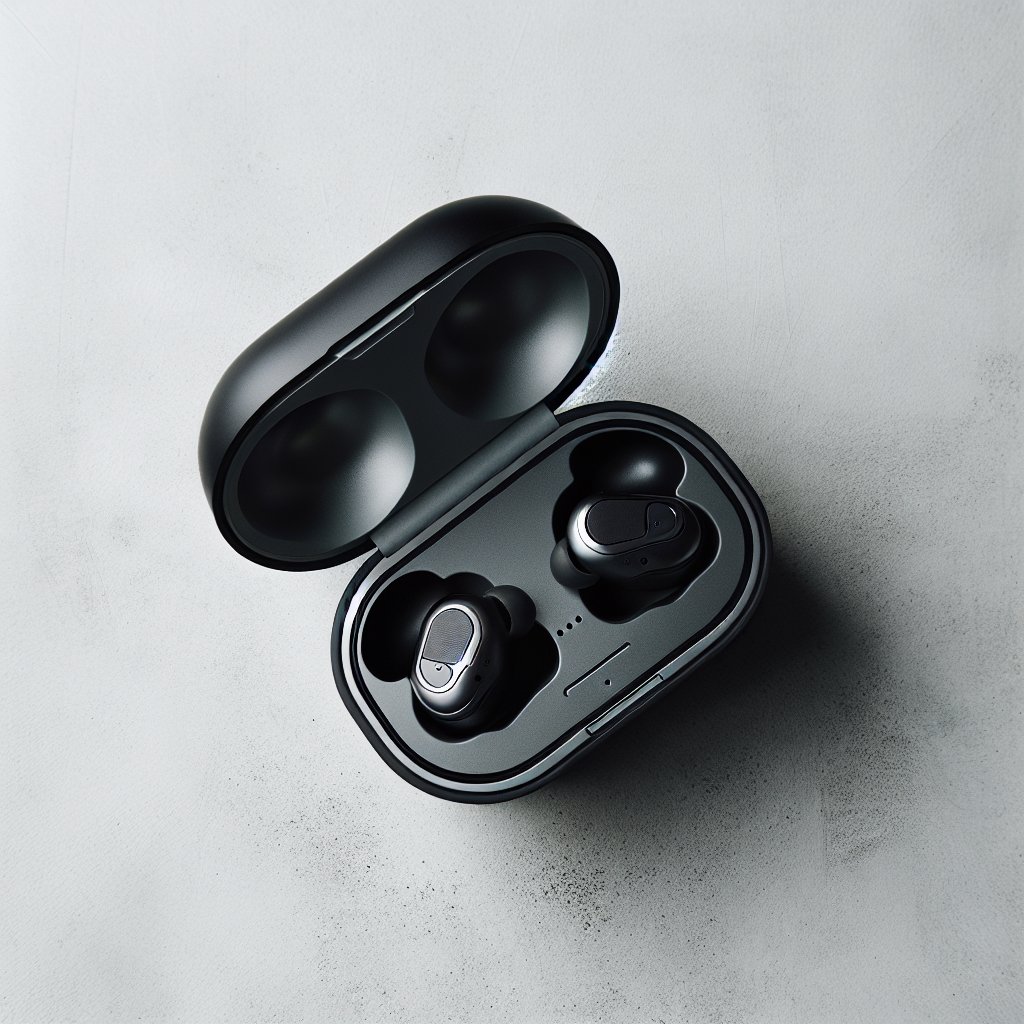
Sound quality doesn't matter if your earbuds fall out mid-set. Secure fit depends on three factors: ear tip material, wing stabilizers, and ear canal shape match.
Silicone ear tips create better seals than foam for sweaty conditions. Foam absorbs moisture and degrades faster, though some athletes prefer the initial comfort. Look for multiple ear tip sizes — at least three pairs in small, medium, and large. Your left and right ears might need different sizes.
Wing tips or ear fins hook into the curves of your outer ear, locking earbuds in place during jarring movements. Brands like Powerbeats Pro (around $200) use over-ear hooks that wrap around your ear completely, providing maximum stability for sprints and box jumps. The tradeoff is slightly longer setup time when putting them on.
Test your fit before buying if possible. Shake your head vigorously side to side — if the earbuds shift, they'll fall out during burpees. Jump in place — movement here means they'll eject during running. The best workout earbuds stay locked with zero adjustment needed during your entire session.
Verdict: For most gym-goers, true wireless earbuds with IPX5+ rating and wing stabilizers provide the ideal combination of secure fit, sweat resistance, and unrestricted movement. Over-ear headphones work if you primarily lift and need marathon battery life.
Active Noise Cancellation: When It Helps and When It Hurts
Active noise cancellation (ANC) uses microphones to detect external sound and generates inverse sound waves to cancel it. This technology excels in gyms with blaring music, grunting lifters, and clanging plates — letting you focus on your own playlist at lower, safer volumes.
The American Speech-Language-Hearing Association recommends keeping headphone volume below 70 decibels for extended listening. ANC allows you to hear your music clearly without cranking volume to dangerous levels. Premium models like Apple AirPods Pro 2 (around $250) offer adjustable ANC intensity, so you can tune out background noise without complete isolation.
However, ANC creates safety risks for outdoor running and cycling. You need to hear approaching vehicles, other runners calling out passes, and emergency sirens. Many ANC headphones include transparency mode or ambient awareness, using the same microphones to pipe external sound into your ears. This provides a middle ground — music plays, but you hear your surroundings.
For outdoor activities, consider bone conduction headphones like Shokz OpenRun Pro (around $180). These sit outside your ear canal, transmitting sound through vibrations against your cheekbones. Your ears stay completely open to environmental sounds, maximizing safety while still delivering clear audio.
Sound Quality vs Durability: Making the Right Tradeoff
Audiophile-grade headphones use delicate drivers and premium materials that don't survive gym abuse. Workout headphones prioritize durability over the last 5% of sound fidelity. You're choosing reinforced plastic over aluminum, sealed ports over vented designs, and ruggedized cables over braided luxury finishes.
For most training, you don't need studio-quality sound. Gym playlists feature bass-heavy electronic music and high-energy rock — genres that don't expose subtle audio deficiencies. As long as bass has punch and mids stay clear, you have sufficient quality for workout motivation.
That said, avoid the cheapest options that produce distortion at high volumes or muddy bass that fatigues your ears. Mid-range workout earbuds ($80-150) deliver satisfying sound that enhances your training without the fragility of premium audio equipment. Budget picks ($50-80) sacrifice some bass depth and sound stage width but remain functional for most users.
Check reviews specifically for sound quality during movement. Some earbuds change acoustic properties when you're running due to air pressure fluctuations in the ear canal, creating a distracting thumping sound with each foot strike. Quality workout earbuds minimize this effect through vented designs that equalize pressure.
Battery Life Expectations and Charging Solutions
True wireless earbuds typically provide 6-8 hours of playback per charge, with the charging case adding 15-24 additional hours. That's 2-3 full recharges before you need to plug in the case. For most gym-goers training 45-90 minutes daily, this means charging the case once or twice weekly.
Quick charge features deliver 1-2 hours of playback from a 10-15 minute charge, perfect when you forgot to charge overnight. The Samsung Galaxy Buds 2 Pro (around $180) offers this feature along with wireless charging case compatibility — drop it on any Qi charging pad.
Over-ear workout headphones like Bose QuietComfort 45 (around $280) provide 24-30 hours per charge with ANC enabled, 35-40 hours with ANC off. You'll charge these weekly or biweekly depending on training frequency. The extra weight and heat buildup are the price for this convenience.
Battery degradation happens over time. After 18-24 months of daily use, expect battery life to drop 20-30%. Replaceable batteries don't exist in true wireless earbuds — degraded battery means replacing the entire unit. This makes warranty coverage and brand reputation important factors. Check our gym bag guide for tips on organizing charging cables and cases.
Best Workout Headphones at Different Price Points
Budget tier ($50-80): JLab Epic Air Sport ANC delivers IPX4 sweat resistance, 70+ hour total battery life with the case, and basic ANC for around $70. Sound quality won't impress audiophiles, but secure ear hooks and reliable connectivity make these solid for beginners who aren't ready to invest heavily.
Mid-range ($100-150): Jabra Elite 4 Active hits the sweet spot at around $120. IPX7 waterproofing, adjustable HearThrough for safety awareness, and excellent call quality for between-set conversations. These survive heavy sweat, provide good bass response, and last through multi-year daily use.
Premium ($200-300): Beats Fit Pro combines Apple ecosystem integration with secure wingtip design for around $200. Active noise cancellation, spatial audio, and 6-hour battery (24 total with case) justify the price for iPhone users who want instant device switching and superior stability during HIIT workouts.
Bone conduction ($150-180): For outdoor runners prioritizing safety, Shokz OpenRun Pro transmits audio through cheekbone vibrations, leaving ears open for traffic sounds. IP67 rating handles rain and sweat, 10-hour battery outlasts most long runs. Sound quality can't match in-ear models, but situational awareness makes this the safest outdoor training option.
What to Avoid: Common Workout Headphone Mistakes
Don't buy headphones with only Bluetooth 4.2 or older. Bluetooth 5.0 and newer provide better range, faster pairing, and lower power consumption. Older versions drop connection when your phone is in a gym locker 30 feet away or in your pocket during certain movements.
Avoid single-bud designs for weight training. Having to remove an earbud to hear your training partner gets annoying. True wireless earbuds let you remove one while keeping the other in, but neckband-style wireless earbuds create a dangling wire that catches on equipment.
Skip headphones without a companion app for EQ adjustment. Everyone's ear canal shape affects sound differently. Apps like those from Jabra and Sony let you customize bass, mids, and treble to your preference and hearing profile. This turns good headphones into great ones.
Don't ignore fit testing. Order from retailers with easy returns. Wear the headphones for a full training session — do pull-ups, sprints, burpees, and heavy compound lifts. If you adjust them even once, they're wrong for you. The right workout headphones require zero mid-workout touching.
Finally, avoid falling for "workout headphones" that lack IPX ratings. Generic wireless earbuds marketed with gym photos often lack sweat protection, failing within months of regular training. Always confirm the IPX rating in official specifications. Our fitness trackers guide provides similar advice for choosing durable wearable technology.
Frequently Asked Questions
Are AirPods good for working out?
Standard AirPods (3rd generation) have IPX4 sweat resistance suitable for moderate gym use but lack secure fit for intense movement. AirPods Pro 2 add IPX4 rating with better seal and stability, making them acceptable for most workouts. However, dedicated workout earbuds with wing stabilizers provide better security during running and high-intensity training.
How long should workout headphones last?
Quality workout headphones should survive 2-3 years of daily use before battery degradation significantly impacts performance. The IPX-rated housing typically outlasts the battery — expect the sweat-resistant seal to remain intact for 4-5 years. Budget options often fail within 12-18 months due to inferior water sealing or battery quality.
Can I wear over-ear headphones for running?
Over-ear headphones bounce during running, requiring frequent adjustment and creating pressure on your head that worsens with each mile. They also trap heat, causing discomfort during outdoor summer runs. Earbuds provide better stability and heat dissipation for running. Reserve over-ear models for walking or stationary cycling where movement is minimal.
What does IPX7 mean on workout headphones?
IPX7 rating means the headphones can withstand submersion in up to 1 meter of water for 30 minutes. For practical use, this covers running in heavy rain, rinsing the headphones under a faucet for cleaning, and surviving accidental drops in puddles. IPX7 exceeds the protection needed for gym sweat, making these headphones suitable for outdoor training in any weather.
Should I get noise cancelling headphones for the gym?
Active noise cancellation helps in loud commercial gyms, letting you hear music at safer volumes without cranking it to compete with background noise. However, you need awareness of your surroundings for safety. Choose headphones with adjustable ANC or transparency mode so you can hear trainers, training partners, and gym staff announcements. Complete isolation is dangerous in shared training spaces.
Do bone conduction headphones work for lifting?
Bone conduction headphones deliver sound through cheekbone vibrations rather than ear canal speakers, producing lower volume and less bass impact than traditional earbuds. They work fine for outdoor running where environmental awareness is critical, but most lifters prefer the motivating bass response of in-ear models. The sound quality tradeoff doesn't justify the cost unless safety is your priority.
How do I clean sweat from workout earbuds?
For IPX4-rated earbuds, wipe silicone ear tips with a slightly damp cloth and dry thoroughly before returning to the charging case. IPX7-rated models allow rinsing ear tips under water — remove them from the earbuds first. Never submerge the charging case unless it specifically has its own IPX rating. Clean weekly to prevent ear infections from bacteria growth.
Will workout headphones work with my phone?
All modern workout headphones use standard Bluetooth, compatible with iPhones and Android devices. However, some features like quick pairing, device switching, and app-based EQ only work with specific ecosystems. Apple headphones integrate best with iPhones, Samsung with Galaxy phones. Check feature compatibility before buying if you want advanced functionality beyond basic audio playback.
Are expensive workout headphones worth it?
Premium workout headphones ($200+) add features like adjustable ANC, spatial audio, better sound quality, and premium build materials. For casual gym-goers, mid-range options ($100-150) provide all essential features — secure fit, sweat resistance, good battery life. Spend more only if you train 5+ days weekly or want specific features like instant Apple ecosystem integration. Check our workout motivation guide for more ways to enhance your training consistency.
Can I use regular wireless earbuds for working out?
Regular wireless earbuds without IPX ratings will fail when exposed to sweat, typically within 2-6 months of gym use. Sweat seeps into charging ports and speaker housings, corroding electronics. Even light sweaters need minimum IPX4 protection. Don't risk damaging expensive everyday earbuds — buy dedicated workout headphones with proper sweat resistance.
What's the best brand for workout headphones?
Jabra, Beats, and Shokz specialize in workout headphones with proven durability. Jabra offers the best value across price ranges with excellent sweat resistance. Beats provides superior fit and Apple integration. Shokz leads bone conduction technology for outdoor safety. Avoid fashion brands that license their name to generic manufacturers — stick with companies that design and test specifically for athletic use.
The Bottom Line
The best workout headphones combine IPX5+ sweat resistance, secure fit with wing stabilizers, and 6+ hour battery life. True wireless earbuds work better than over-ear models for most training. Budget $100-150 for reliable mid-range options, or choose $50-80 budget picks if you're testing whether headphones improve your training. Outdoor runners should consider bone conduction models for maximum safety awareness.
Sources:
- Effects of music on exercise performance. Frontiers in Psychology. https://www.frontiersin.org/articles/10.3389/fpsyg.2020.00001/full
- Safe listening practices. American Speech-Language-Hearing Association. https://www.asha.org/public/hearing/safe-listening/
- IPX rating standards. International Electrotechnical Commission. https://www.iec.ch/